Where the money is going has become obvious. Ask buyers where their growth budgets are headed and the answer is remarkably consistent: CTV. Nielsen's The Gauge has shown streaming overtaking broadcast TV viewing time for a while now, and the US CTV ad spend pool sits in the tens of billions of dollars.
But the money is only half the story. The longer you work in this space, the more awkward CTV's position looks: the budgets showed up early, the infrastructure is still catching up. A lot of assumptions that are second nature in digital advertising simply break on the living-room screen.
A fragmented screen
Let's nail down what CTV actually is. Connected TV means internet-connected big screens, in two physical forms: smart TVs with their own app ecosystems — Samsung's Tizen and LG's webOS are the canonical examples — and streaming boxes and sticks: Roku, Amazon Fire TV, Apple TV, Google TV.
That lineup already hints at the first problem: fragmentation. Mobile ad serving is painful too, but at least it plays out inside two operating systems. CTV runs at least six parallel platforms, each with its own ad SDK, its own player implementation, its own quirks about when tracking pixels fire. The same VAST creative that plays fine on Roku can hit a Samsung set and come back with unexpanded macros or pixels that never send.
And the spec doesn't cover these differences. You find them the hard way.
Still VAST — but the unit of trade changed
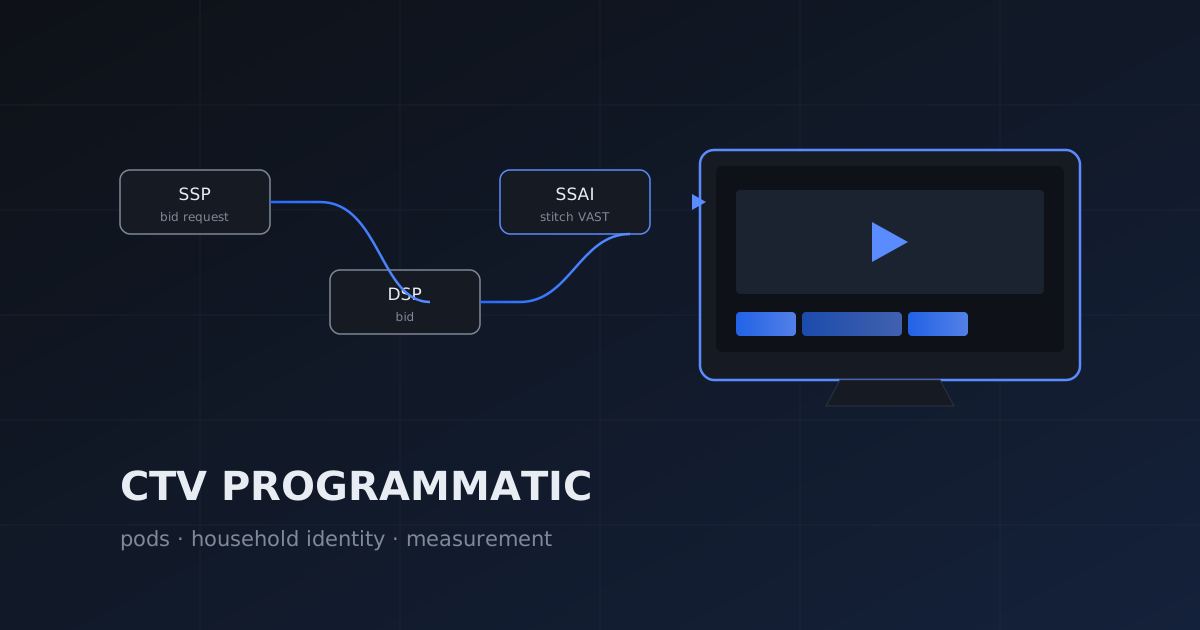
People talk about CTV like it's a new species, but lift the hood on the serving layer and mainstream CTV traffic still runs the programmatic playbook: the SSP sends bid requests, DSPs bid, and the winner gets stitched into the stream via SSAI (server-side ad insertion). VAST is still the serving format.
What actually changed is what's being bought and sold.
An ad pod isn't just "some ads in a row"
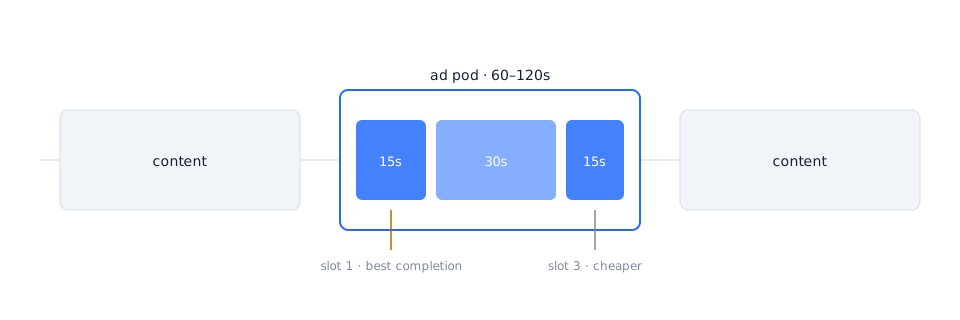
CTV commercial breaks follow broadcast TV: a 60–120 second ad pod slotted between content segments, holding three or four creatives. So a lot of CTV bid requests aren't offering "one impression" — they're offering "one slot inside a pod." Whether your creative is 15s or 30s determines how many slots you occupy, and your position inside the pod directly shapes completion.
Buyers love 15s: cheap, easy to build frequency with. Publishers prefer 30s: pods fill up cleanly and the story gets told. The tension has never fully resolved; most platforms hand it to the auction and let bids assemble pod compositions themselves.
The household, not the person
This is the biggest mental shift from mobile advertising. A phone is personal; the living-room screen is shared by everyone in the house. CTV identity is therefore anchored to the household, not the person: what you actually get is ACR (automatic content recognition) viewing data at the TV level and implicit association between devices on the same network. That's it.
The missing person-level identity causes immediate, practical trouble. Frequency control is the classic case. In theory a household should see the same ad no more than three times a week. But apps don't share frequency state — Pluto tonight, Tubi tomorrow, and the same ad shows up every single evening. The advertiser paid for a frequency of three and got nine.
Device IDs are a mess too. Apple TV doesn't expose an IFA at all, Roku's position has shifted more than once, and the Android TV ecosystem resembles mobile but with far lower opt-in rates.
IP stepped in as a stand-in — with its own traps
Without stable device IDs, a lot of the industry fell back on IP. IP targeting is now one of the most common targeting levers in CTV, and one of the highest-failure-rate ones: dorm networks and hotels hang hundreds of "households" off a single address, and carrier-grade NAT has multiple households sharing one egress IP. Any audience analysis or attribution built on IP needs generous tolerance for that noise — otherwise the dashboard looks tidy and the conclusions point the wrong way.
The viewability debate dies here
The web spent a decade arguing about viewability: does 50% of the ad in view for one second count as seen? CTV makes that argument moot — full screen, sound on, no fold. Practically every CTV impression meets the MRC viewability standard out of the box.
So the industry's argument moved one level down: attention, and outcomes.
On the attention side, measurement vendors are trying to infer whether anyone is actually in front of the screen, using ACR data and device interaction signals. On the outcomes side there are three workhorses: brand lift surveys, incrementality tests with holdout groups, and household-graph attribution. The problem is that none of the three is standardized; different vendors' numbers can diverge by twenty or thirty percent on the same campaign. Nobody is cheating — measurement in this space genuinely isn't mature yet.
There isn't much an advertiser can do about that. Pick one or two measurement partners and calibrate with them over time; don't put three vendors' numbers in one spreadsheet and make them fight.
Some counterintuitive facts
Spend a while in CTV and you learn that the numbers don't mean what you think they mean.
Completion rates really are high — routinely above ninety percent — but that doesn't mean people enjoy the ads. Most CTV platforms have no skip button, remote-control interaction is high-effort, and viewers are off on their phones while the ad plays. Completion on CTV is a mechanical metric; it tells you nothing about creative quality. Brand recall and downstream behavior are what actually discriminate.
The vast majority of bid requests are filtered out silently. Household frequency caps and brand-safety lists are two gates, and on some campaigns seventy or eighty percent of requests never reach the auction. The fill rate you see in reports is the result after two rounds of filtering.
One more easy thing to overlook: bigger assets aren't better. 4K creative sounds premium, but plenty of platform players still decode at 1080p and distribution chains compress the bitrate anyway. The quality gain is marginal; the increase in load failures is real.
Practical notes for practitioners
If you're buying CTV or building tooling around it, a few lessons that save detours:
Watch pod position before you optimize anything else. The same creative can see tens of percentage points of completion-rate difference between the first and fourth slot of a pod. Buying a better position is usually cheaper than making a better ad.
When tracking numbers go wrong, check the SSAI stitching logs first. Server-side insertion moved pixel firing from the client to the stitcher; most "missing pixels" are actually mismatched parameters at the stitching stage.
When geo numbers drift badly, suspect IP geolocation first. A campaign showing "viewers" in states you never targeted is not unheard of.
CTV advertising today feels a lot like mobile advertising in 2012: the money arrived, the standards are still on their way. The attention here is real, and so are the potholes. The good news: the serving foundation is still the VAST stack we've been sharpening all along — and that's exactly where our next tool is heading.